Lenovo ThinkPad X1 Yoga (3rd Gen) review
Lenovo ThinkPad X1 Yoga (3rd Gen) — from 2017, 1.4 kg, performance 25.
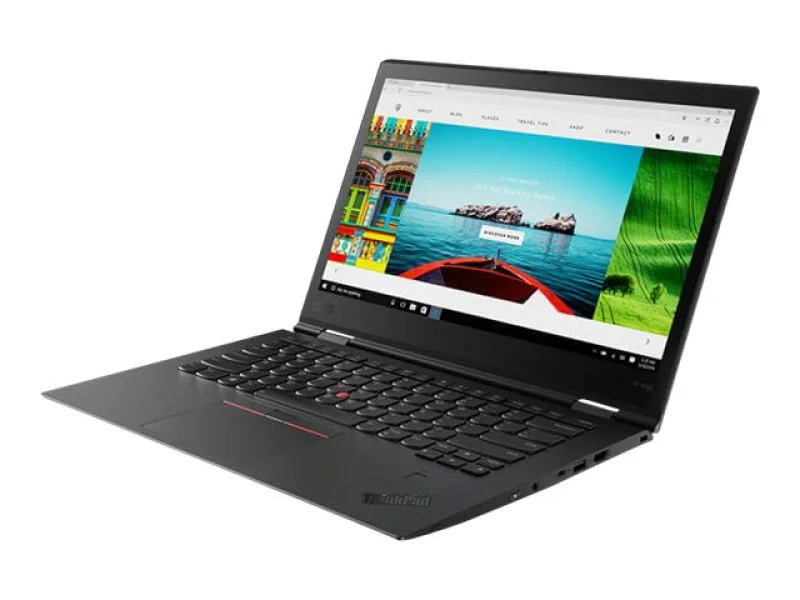
Technical specifications
| Type | Convertible (2-in-1) |
| Release year | 2017 |
| Screen | 14" · 2560x1440 |
| Processor | Intel Core i5 8350U |
| Max. RAM | 32 GB |
| Weight | 1.4 kg |
| Battery | 54 Wh |
Performance scores
ThinkPad X1 Yoga 3rd Gen — a premium convertible at a friendly price
The X1 Yoga 3rd Gen (2017) is the convertible flagship of its ThinkPad year: a Core i5-8350U with 32GB of RAM, pen-supporting 360-degree chassis, at $251 — well under the $356 convertible-class median. The profile is premium-platform-typical: CPU 32.75 against a 59.6 median (a vPro quad-core of the 8th generation, below the modern midpoint), reliability 21 versus 49, and graphics zero against a 3.84 near-floor median.
What it does well
The X1 Yoga's argument is the total package at the price: a premium thin chassis that converts to tablet and tent modes with pen support, 32GB of RAM — unusual in any convertible — and the full ThinkPad keyboard. The 8350U is a competent quad-core for office and light development work. Against a $356 class median, $251 buys the top-tier name at mid-tier money.
The trade-offs, stated plainly
Graphics at zero: no dGPU, no gaming claims — the standard X1 compromise. Reliability at 21 versus 49 is the age signal: an eight-year-old premium chassis whose battery and hinges (a convertible's critical wear parts) are aging. Performance is adequate rather than quick against newer class rivals.
Price trajectory
From a $1,500 launch position it has declined at about 8.5% per year to $251, with a projected $210 in two years (16% further). Premium convertibles depreciate hard early and flatten late — this one is in the flattening phase.
Against its neighbors
An HP EliteBook x360 1030 G3 at $277 and a Dell Inspiron 7579 x360 at $269 sit above; a Dell Latitude 7200 2-in-1 at $234 and a Lenovo Flex 3-1480 at $230 below. The Latitude 7200 2-in-1 at $234 is the same-tier rival for $17 less — the X1 Yoga counters with the pen experience and 32GB of RAM.
Bottom line
A budget-friendly entry to the premium-convertible class: flagship chassis, pen support, unusual RAM depth. For note-takers and road warriors wanting X1 ergonomics at half the class median it is a strong pick — provided gaming is irrelevant and the age caveats are accepted.
🧭 Your context
Stage: Refining requirements
You're refining — compare finalists head-to-head.
🎯 For your profile
You've viewed: You've recently viewed 30 models — compare this model with them in the analogs matrix.
⭐ What stands out
-
graphics performance absent (no data or feature not provided).
-
reliability is lower than typical convertible class (+57.1%) (low tier).
budget segment of category -
CPU performance is lower than typical convertible class (+45.1%) (office tier).
budget segment of category
🔁 Alternatives
Compromise axis: mobility ↔ overall performance
⚙️ Configuration analysis
Top configuration is built for office apps, web browsing, and basic daily tasks.
🤔 How to choose
Universal advice for any use case.
- Reliability vs price: reliability (median 49) ↔ price (median 355.7).
- Weight vs CPU: mobility (median 68) ↔ overall performance (median 37.4).
- Upgradeability vs battery: upgradability (median 50) ↔ battery life (median 4.7).
ThinkPad X1 Yoga (3rd Gen): verdict
➡️ Next step
You're refining — compare finalists head-to-head.