HP 2000 review
HP 2000 — from 2012, 2.45 kg, performance 27.
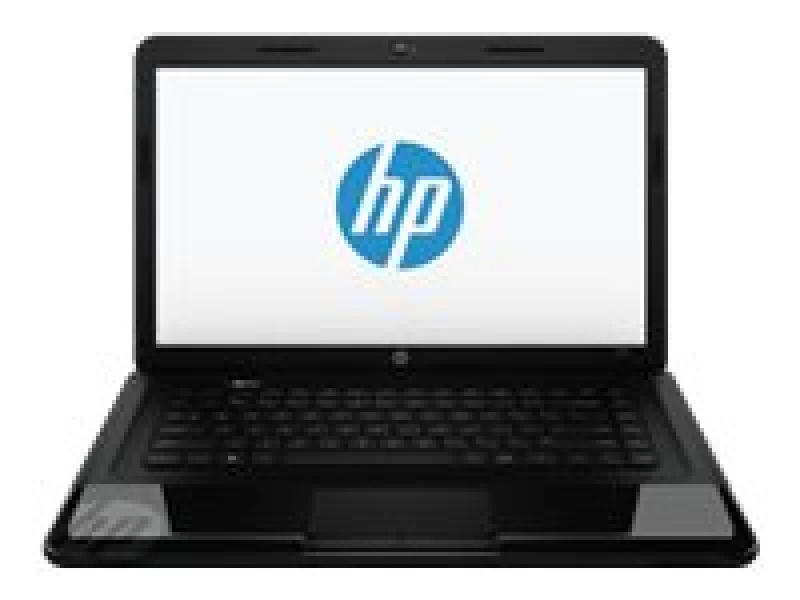
Technical specifications
| Type | Laptop |
| Release year | 2012 |
| Screen | 15.6" · 1366x768 |
| Processor | AMD E1 1200 , Intel Pentium 2020M , AMD E-450 1.65 GHz , Intel Core i3 3110M |
| Graphics | Radeon HD 7310 , Radeon HD 6320 |
| Weight | 2.45 kg |
Performance scores
HP 2000 (2012): the ninety-two-dollar notebook whose flags retire every claim
The HP 2000 is the classic entry-level consumer notebook of 2012, and at $92 it is the cheapest priced record in this batch. Its sheet is a lesson in artifact reading: a graphics placing of 45.85 that outranks 68.3 percent of its class, wrapped around an AMD E1 1200 whose CPU score of 7.86 sits 86.7 percent under the class median — and game flags that fail at every turn.
Where it holds up
The promoted strength is the graphics placing: 45.85 against a general-class median of 27.24, above the class midpoint. But the flag sheet retires that claim: minimum-setting Grand Theft Auto V fails its check, The Witcher 3 and Counter-Strike 2 both fail outright — no gaming claim survives the data. What genuinely survives is the price: $92 with a 6.41 percent annual depreciation rate, the second-gentlest decline curve among this batch's priced records, behind only the 250 G1's 5.69. At this money the machine is a fixed-function purchase — a writing box, a kiosk terminal, a first computer for a child.
Where it falls short
CPU performance is the flagged weakness: 7.86 against a class median of 58.99, a level the bands call basic. Reliability reads 12 against a median of 54 — 77.8 percent under — and mobility 13 against 50 ties the 250 G1 for the carry floor of this batch's priced records. Overall performance reads 26.86, low band; office 30.29, low band; portability 26.5, low band. The gaming index of 71, high band, is the artifact at work — driven by the flattered graphics placing the flags contradict.
Practically: single light application at a time, offline duty preferred, and no gaming expectation whatsoever.
Price and depreciation
At $92 with a modeled annual loss of 6.41 percent, the record is the batch's floor-priced entry. The base price is not recorded, so there is no dollar projection to quote — but at this level the depreciation math barely matters: the machine costs less than the risk.
Alternatives to consider
For $97 more, the HP 250 G1 in this batch ($191) trades the dead flags for three green minimum checks — Rainbow Six Siege, Minecraft and League of Legends — and a gentler 5.69 percent depreciation rate. The HP 240 G6 at $289 changes the tier entirely: office 45.85 in the mid band and its own green flag sheet. Within this batch, every priced step up from the 2000 buys measurable capability.
Bottom line
Fairly priced for the class, the HP 2000 is a ninety-two-dollar fixed-function box: the artifact-flattered graphics placing is retired by failing flags on every game, the CPU is basic-band and reliability is low — a purchase of price alone, honest only about what it cannot do.
🧭 Your context
Stage: Refining requirements
You're refining — compare finalists head-to-head.
🎯 For your profile
You've viewed: You've recently viewed 33 models — compare this model with them in the analogs matrix.
⭐ What stands out
-
CPU performance is lower than typical general laptop class (+86.7%) (basic tier).
budget segment of category -
reliability is lower than typical general laptop class (+77.8%) (low tier).
budget segment of category -
mobility is lower than typical general laptop class (+74%) (low tier).
budget segment of category
🎮 What it can run
⚙️ Configuration analysis
Top configuration suits everyday productivity, light photo editing, and esports titles.
🤔 How to choose
Universal advice for any use case.
- Reliability vs price: reliability (median 54) ↔ price (median 247.9).
- Weight vs CPU: mobility (median 50) ↔ overall performance (median 43.1).
- Upgradeability vs battery: upgradability (median 50) ↔ battery life (median 2.3).
2000: verdict
➡️ Next step
You're refining — compare finalists head-to-head.