Dell Latitude E6410 review
Dell Latitude E6410 — from 2010, 2.5 kg, performance 13.
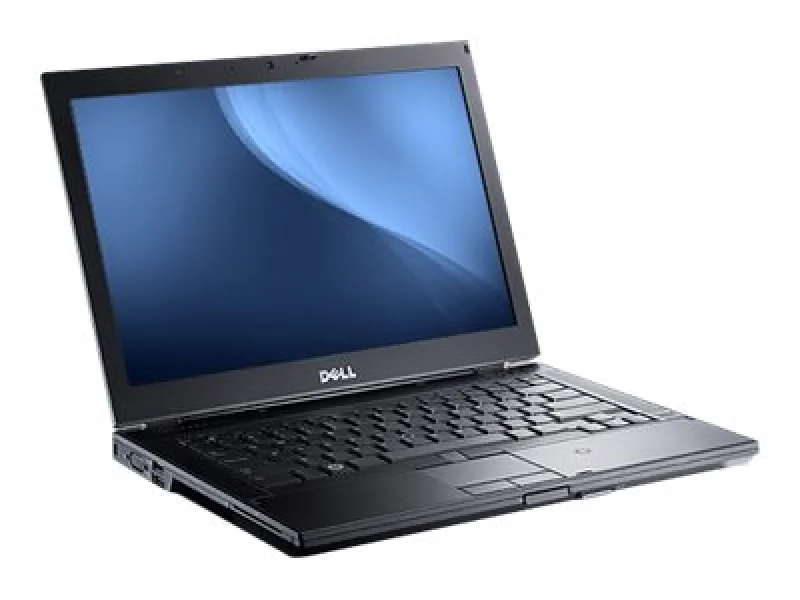
Technical specifications
| Type | Business |
| Release year | 2010 |
| Screen | 14" · 1440x900 |
| Processor | Intel Core i5 560M , Intel Core i7 640M |
| Graphics | Quadro NVS 3100M , NVS 3100M |
| Max. RAM | 32 GB |
| Weight | 2.5 kg |
Performance scores
Where the Latitude E6410 stands
The Dell Latitude E6410 is a 2010 business laptop — sixteen years old at the time of writing — priced at roughly $127, well below the $297 category median for workstation-class hardware. The E6410 was a premium corporate fleets machine in its day; in 2026, the question is more pointed than for younger hardware: at what point does age itself disqualify a laptop from consideration, regardless of price?
The CPU floor: a defining constraint
The specification that frames every other assessment of the E6410 is processor performance. With a best-CPU score of 2.03 against a category median of 52.97, the laptop sits at 96% below the median — a gap so wide that no other specification can compensate. In practical terms, the E6410 will handle single-task document editing, basic browsing, and email at acceptable speed, but any modern multitasking scenario (several browser tabs, video conferencing with screen sharing, office suites with live collaboration) will expose the CPU as the binding constraint. This is not a laptop that can be made faster with more RAM or storage — the CPU is the ceiling.
What still works in 2026
The Latitude E6410 has no axis where it exceeds the workstation-class median, but it does have specifications that age well. A 32 GB memory ceiling is generous for the era (many 2010 laptops capped at 8 GB). The 14-inch form factor, keyboard travel, and chassis build quality are typical of Latitude E-series corporate hardware — units that have survived sixteen years tend to be in better cosmetic condition than consumer laptops of the same vintage. The honest assessment is that the E6410 remains usable for narrow, single-task workflows; the dishonest assessment would be to pretend the CPU floor does not define the experience.
Price trajectory
The depreciation curve is essentially complete. From an estimated $1,300 MSRP in 2010, the laptop has settled at $127 — a 5.44% annualised rate over sixteen years, which is low because the price floor has been flat for the last several years. The projected two-year price of $114 represents a further 10.6% decline, but at this price level the dollar amounts are small enough that depreciation is not a buying criterion. A buyer at $127 is paying for immediate, short-term utility, not for an asset that will hold value.
How it compares
In the sub-$140 segment of comparable vintage, the E6410 competes with HP ProBook 6465b ($140) and ProBook 6475b ($135) upward, and HP EliteBook 2540p ($110) and ProBook 6450b ($120) downward. All four are 2010–2012 corporate-fleet machines with similar CPU constraints and similar memory ceilings. The Latitude's distinguishing factors are keyboard quality and chassis durability — Dell's E-series Latitude line was built for three-year corporate lease cycles and the surviving units are typically robust.
Bottom line
The Latitude E6410 at $127 is a budget-friendly pick with one critical caveat: the 2010 CPU is the binding constraint on every workflow. For a buyer who needs a cheap, durable machine for narrow, single-task use — document editing offline, a child's first laptop, a dedicated terminal for a single application — the E6410 is priced honestly for what it can still do. For any buyer anticipating modern multitasking, video calls, or anything CPU-intensive, the laptop is not appropriate regardless of price. The honest framing is that age itself, not any specific weakness, is what limits this machine.
🧭 Your context
Stage: Refining requirements
You're refining — compare finalists head-to-head.
🎯 For your profile
You've viewed: You've recently viewed 27 models — compare this model with them in the analogs matrix.
⭐ What stands out
-
reliability is lower than typical business class (+97.6%) (low tier).
budget segment of category -
CPU performance is lower than typical business class (+96.2%) (basic tier).
budget segment of category -
graphics performance is lower than typical business class (+87.2%) (office tier).
below class average
🔁 Alternatives
Compromise axis: reliability ↔ price
🎮 What it can run
⚙️ Configuration analysis
Top configuration is built for office apps, web browsing, and basic daily tasks.
🤔 How to choose
Universal advice for any use case.
- Reliability vs price: reliability (median 42.5) ↔ price (median 297.4).
- Weight vs CPU: mobility (median 60) ↔ overall performance (median 41.5).
- Upgradeability vs battery: upgradability (median 62.5) ↔ battery life (median 3.3).
Latitude E6410: verdict
➡️ Next step
You're refining — compare finalists head-to-head.