ASUS Vivobook 16X (M1603) review
ASUS Vivobook 16X (M1603) — from 2022, 1.8 kg, performance 59.
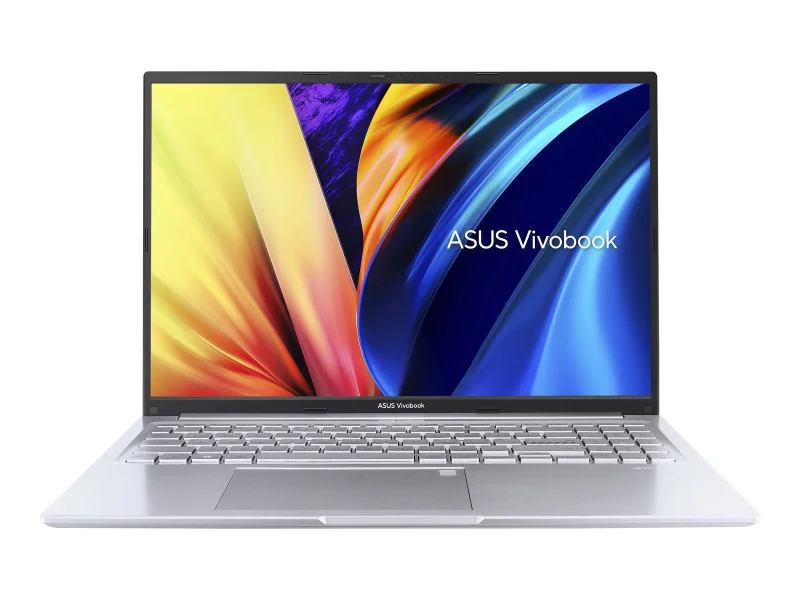
Technical specifications
| Type | Laptop |
| Release year | 2022 |
| Screen | 16" · 1920x1200 |
| Processor | AMD Ryzen 5 5600H , AMD Ryzen 7 5800H , AMD Ryzen 7 5800HS , AMD Ryzen 9 5900HX |
| Graphics | Radeon RX Vega 7 |
| Max. RAM | 40 GB |
| Weight | 1.8 kg |
| Battery | 50 Wh |
Performance scores
A $470 all-rounder that beats its class on every headline axis
The Vivobook 16X (M1603) of 2022 pairs a Ryzen 5 5600H with Vega 7 graphics and 40 GB of RAM at $470, and the peer comparison cannot find a weakness to flag: graphics place at 43.85 against a general-class median of 27.24 (61 percent above), the performance index at 59.18 against 43.05 (37.5 percent above, top quartile), and the aggregate score at 67 against 53 (26.4 percent above, also top quartile). A no-weakness verdict at this ticket is rare, and the receipts back it.
Three top-tier readings, one price
By peer comparison this machine has no serious weak spot, and the highlights explain the verdict: the Vega 7 places it 61 percent above the graphics median — mainstream tier, remarkable for integrated silicon — while the blended performance index and the aggregate score both land in the top quartile of the class. The 40 GB of RAM means memory never binds. On a general shelf full of compromises, this configuration simply out-places its neighbors across the board.
Receipts at the recommended tier
The capability sheet passes everything it tests at the higher bar: Overwatch, Grand Theft Auto V, and Rainbow Six Siege clear recommended, and Adobe Photoshop and Visual Studio Code clear minimum. Esports and light titles at 1080p, photo edits, and development work are all inside the verified envelope. The 5600H is a genuine H-series part, and it shows in the performance index — this is a working machine, not a browsing appliance.
Mid-tier decay, measured
The rate is 11.94 percent per year with no launch anchor for this unit — a middling slope. Two years at that rate retain roughly three-quarters of the $470. With capability bars this green and a ticket this low, the depreciation exposure is an afterthought rather than a decision variable.
Positioning on the shelf
No analog peers are returned. Within the batch, the VivoBook 15 M513 shares the Vega 7 platform at $399 with half the memory and a slower CPU — the M1603's $70 premium buys the H-series processor and 24 more gigabytes of RAM, which the data calls a clean upgrade. Above it, dGPU machines start at the next price band.
Bottom line
This is the balanced-buyer's seat in this batch: no flagged weakness, top-quartile performance and aggregate scores, recommended-tier gaming receipts on integrated graphics, and 40 GB of headroom — all at $470. A buyer who wants one machine to do everything modestly well has found it, and the numbers, unusually, agree all the way down.
🧭 Your context
Stage: Refining requirements
You're refining — compare finalists head-to-head.
🎯 For your profile
You've viewed: You've recently viewed 30 models — compare this model with them in the analogs matrix.
⭐ What stands out
-
graphics performance is higher than typical general laptop class (+61%) (mainstream tier).
above class average -
overall performance is higher than typical general laptop class (+37.5%) (mid).
top 25% of its category -
composite score is higher than typical general laptop class (+26.4%).
top 25% of its category
🎮 What it can run
⚙️ Configuration analysis
Top configuration suits everyday productivity, light photo editing, and esports titles.
🤔 How to choose
Universal advice for any use case.
- Reliability vs price: reliability (median 54) ↔ price (median 247.9).
- Weight vs CPU: mobility (median 50) ↔ overall performance (median 43.1).
- Upgradeability vs battery: upgradability (median 50) ↔ battery life (median 2.3).
Vivobook 16X (M1603): verdict
➡️ Next step
You're refining — compare finalists head-to-head.