ASUS Vivobook Go 15 OLED (E1504) review
ASUS Vivobook Go 15 OLED (E1504) — from 2023, 1.63 kg, performance 32.
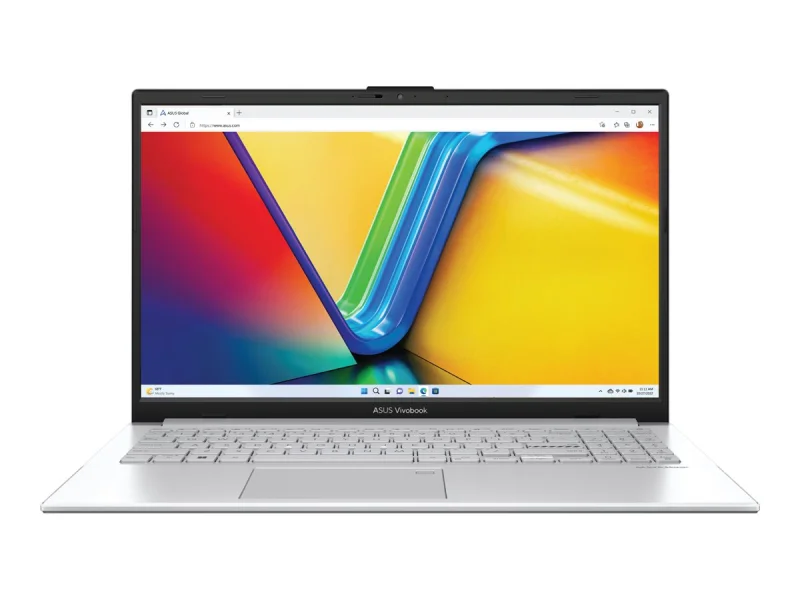
Technical specifications
| Type | Netbook |
| Release year | 2023 |
| Screen | 15.6" · 1920x1080 |
| Processor | AMD Ryzen 3 7320U , AMD Ryzen 5 7520U , Intel Processor N200 , Intel Core i3 N305 , Intel Processor N100 |
| Max. RAM | 16 GB |
| Weight | 1.63 kg |
| Battery | 42 Wh |
Performance scores
An OLED big-screen laptop shelved among netbooks, priced at $246
The Vivobook Go 15 OLED (E1504) is a 2023 machine filed on the netbook shelf, and the filing is the first thing to look past: its 15.6-inch panel is 24.8 percent larger than the class median of 12.5 — a top-quartile reading that says this is a full-size laptop wearing a small-computer badge. Judge the machine, not the shelf. At $246 with a Ryzen 3 7320U, 16 GB of RAM, and an OLED panel, the ticket is floor-tier; the data flags memory (16 GB, a third below the class median of 24) as the weakness and the screen as the strength.
The screen is the purchase
An OLED panel at $246 is the anomaly that defines this machine. The highlights put the 15.6-inch diagonal in the top quartile of its class, and the display technology behind that number delivers the contrast and color that OLED buyers are paying multiples of this ticket for elsewhere. The 1.63 kg body reads as light within its class — another top-quartile placement — making this a big screen that still carries like a small one.
Flags at the era boundary
The capability sheet tells an honest mixed story. Grand Theft Auto V clears minimum with a measured 140 fps entry; Overwatch clears minimum; but Far Cry 5 fails its minimum by a wide margin. That is the shape of integrated Ryzen 3 graphics in 2026: older or lighter titles pass, anything from the modern middle falls short. Visual Studio Code clears minimum for development work. The envelope is single-app computing on a beautiful panel — not gaming, and the flags retire any claim beyond GTA V minimum.
Floor-tier price, class-rate decay
No launch anchor exists for this unit, and the class rate of 12.83 percent per year is the only measured trajectory — roughly three-quarters retained after two years. At a $246 entry the absolute exposure is small; the OLED panel is the component most likely to outlive the ticket.
Positioning on the shelf
No analog peers are returned. Within the batch, the general-shelf Vivobooks at $553 carry faster silicon without the OLED; nothing else at this ticket offers this panel. The E1504's corner — sub-$250, 15.6 inches, OLED — is effectively its own.
Bottom line
This is a screen purchase with a laptop attached. For media, reading, and single-app work at the lowest ticket in this batch, the OLED diagonal and top-quartile lightness deliver real value; the 16 GB ceiling and the failed Far Cry minimum scope the compute honestly. Buy it for the panel, keep the gaming expectations at GTA V minimum, and the shelf filing stops mattering.
🧭 Your context
Stage: Refining requirements
You're refining — compare finalists head-to-head.
🎯 For your profile
You've viewed: You've recently viewed 3 models — compare this model with them in the analogs matrix.
⭐ What stands out
-
memory capacity is lower than typical netbook class (+33.3%) (comfort).
below class average -
weight is higher than typical netbook class (+25.4%) (light tier).
top 25% of its category -
screen diagonal is higher than typical netbook class (+24.8%) (large tier).
top 25% of its category
🎮 What it can run
⚙️ Configuration analysis
Top configuration suits everyday productivity, light photo editing, and esports titles.
🤔 How to choose
Universal advice for any use case.
- Reliability vs price: reliability (median 65) ↔ price (median 226.1).
- Weight vs CPU: mobility (median 71) ↔ overall performance (median 26.8).
- Upgradeability vs battery: upgradability (median 37.5) ↔ battery life (median 3).
Vivobook Go 15 OLED (E1504): verdict
➡️ Next step
You're refining — compare finalists head-to-head.