ASUS TUF Dash F15 FX516 review
ASUS TUF Dash F15 FX516 — from 2021, 2 kg, performance 69.
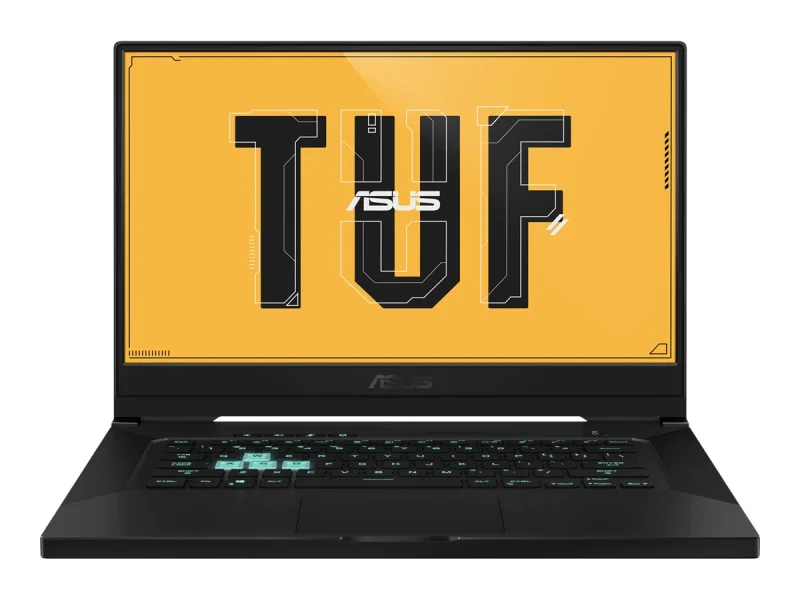
Technical specifications
| Type | Gaming |
| Release year | 2021 |
| Screen | 15.6" · 1920x1080 |
| Processor | Intel Core i5 11300H , Intel Core i7 11370H |
| Graphics | GeForce RTX 3050 Mobile 4GB , GeForce RTX 3050 Ti Mobile 4GB , GeForce RTX 3060 Mobile 6GB , GeForce RTX 3070 Mobile 8GB |
| Max. RAM | 32 GB |
| Weight | 2 kg |
| Battery | 76 Wh |
Performance scores
The five-year-old Dash that still clears its bars
The ASUS TUF Dash F15 FX516 is a 2021 gaming machine: a Core i5-11300H with a GeForce RTX 3050 of 4GB and 32GB of memory at $590. The sheet reads mobility at 35 — twenty-one percent above the gaming-class median, top-quartile, in a 2.0-kilogram frame — as the strength; the recorded weak axis is the 32GB memory ceiling at half the class norm.
Verified greens, five years on
The flag sheet has aged well: Overwatch, Grand Theft Auto V and Rainbow Six Siege all clear recommended, and Photoshop with Visual Studio Code clear minimums. A 3050-class card behind a recommended-level green sheet at a five-hundred-ninety-dollar ticket is the honest definition of a value gaming seat — the card tier is mainstream, the level language keeps it calibrated, and the Dash line's thinner frame puts the mobility reading in the class's top quartile.
The honest age arithmetic
Five years of platform age show in the memory ceiling — 32GB was the norm then and is half the norm now — and in the processor tier behind the card. The 2.0-kilogram frame at seventeen percent below class weight is the machine's continuing asset. No depreciation anchor is recorded; the gaming-platform convention runs near thirteen percent per year, and at this ticket the remaining exposure is small in absolute terms.
No depreciation anchor
Without an anchor the curve cannot be drawn; the value statement is the flag sheet against the ticket. The within-batch comparison sharpens it: the ASUS V16 at $650 offers the newer eight-core engine and top-quartile reliability for sixty dollars more.
Positioning against the aisle
No recorded analogs fall within the comparison band. The honest neighbors are in-batch: the V16 above on every reading, the 2022 TUF Dash at $737 above on frame-tier alone — this seat is the budget corner of the same family triangle, priced accordingly.
Bottom line
A fairly-priced legacy-generation gaming ticket with verified recommended-level greens and a genuinely portable frame for the class. Buy it for budget 1080p duty; the memory ceiling and the platform age are the honest terms.
🧭 Your context
Stage: Refining requirements
You're refining — compare finalists head-to-head.
🎯 For your profile
You've viewed: You've recently viewed 20 models — compare this model with them in the analogs matrix.
⭐ What stands out
-
memory capacity is lower than typical gaming class (+50%) (professional).
below class average -
mobility is higher than typical gaming class (+20.7%) (low tier).
top 25% of its category -
weight is lower than typical gaming class (+16.7%) (standard).
budget segment of category
🎮 What it can run
⚙️ Configuration analysis
Top configuration handles modern AAA games at high settings, video editing, and heavy multitasking.
🤔 How to choose
Universal advice for any use case.
- Reliability vs price: reliability (median 53) ↔ price (median 749.6).
- Weight vs CPU: mobility (median 29) ↔ overall performance (median 73.9).
- Upgradeability vs battery: upgradability (median 100) ↔ battery life (median 2.5).
TUF Dash F15 FX516: verdict
➡️ Next step
You're refining — compare finalists head-to-head.